The people behind the pages.

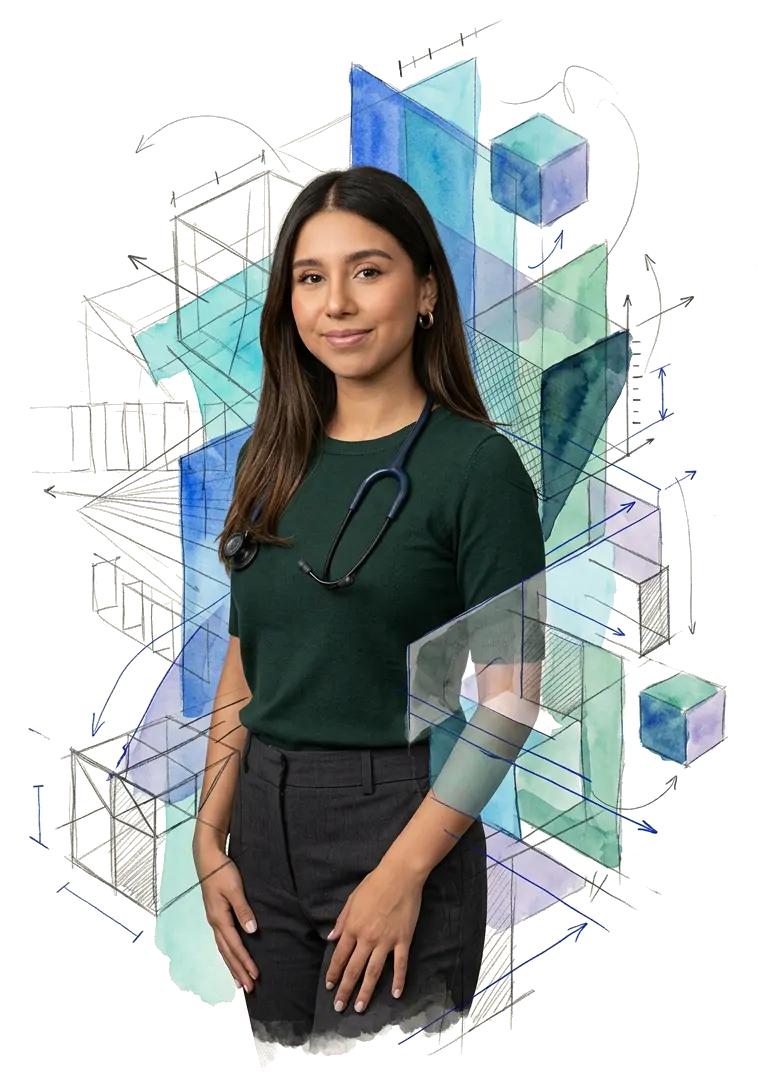
Logan Pearson, wearing a stethoscope, among pencil sketches and watercolor building blocks

Hi, I’m Logan.

I’m a pediatrician, a researcher, and someone who has spent much of his life working with children. I’ve always loved building things, asking questions, and figuring out how to make something work.

Building Blocks Books is where those parts of my life came together.
Why stories?

Knowing a skill exists is different from knowing how to use it, especially when you’re a child in the middle of a difficult moment.

A story gives children a character to recognize themselves in, an idea to explore, and something they can return to. I also want the adults reading alongside them to understand the ideas behind the books without having to sort through complicated research.

The idea behind Building Blocks Books came from bringing those questions together with my love of creating.

There are useful skills that can help children work through fear, frustration, stress, and other difficult moments. But knowing a technique exists is very different from knowing how to use it, especially when you’re a child in the middle of one of those moments.

I began wondering whether stories could help bridge that gap.

A character can struggle, misunderstand, argue, and try something that initially sounds ridiculous. Children can laugh at what happens, recognize a little of themselves, and discover something useful without feeling like they’re being given a lesson.

And because it’s a story, they can come back to it again and again.

I also wanted parents and caregivers to have a way to understand the ideas behind the books. The medical knowledge and research should be accessible, without requiring anyone to sort through complicated scientific literature just to understand why a skill might be helpful.

The hope is to create something that works on both levels: a genuinely enjoyable story for children and a useful resource for the adults who care for them.

The story still has to come first.

If children don’t want to hear it again, I’ve missed an important part of the point.

Collaboration / Spanish editions

Hi, I’m Cristy.

Portrait of Dr. Cristy Ortega
Dr. Cristy Ortega, MD, MSSpanish translation & cultural adaptation

I’m a pediatrician, lifelong book lover, and passionate believer in the power of stories to help children feel seen, understood, and connected.

Growing up in a Spanish-speaking household, books became a bridge between two worlds. My hope is to help break down language barriers so more children and families can share stories that feel natural, meaningful, and truly theirs.

Growing up in a Spanish-speaking household, books became a bridge between two worlds. They helped me learn English while keeping me connected to my language, my family, and my roots. That experience shaped a belief I still carry today: every child deserves stories they can enjoy and share with the people they love in both English and Spanish.

Through my work in pediatrics, I see how reading together can strengthen family bonds, spark curiosity, and help children make sense of big feelings and new experiences. Stories can introduce young readers to different perspectives while nurturing kindness, confidence, empathy, and acceptance.

My hope is to help bring more bilingual stories into more homes, breaking down language barriers one book at a time. When children and families read together, they do more than learn. They connect, grow, and discover whole new worlds together.

Every child deserves stories that feel natural, meaningful, and truly theirs.

On the writing desk

One of the first Building Blocks Books stories follows a young superhero whose body becomes so tense that even flying feels impossible.

A floating wizard offers to help. Our hero argues, questions the instructions, and then gives it a try.

It’s the kind of story I want to make: a little ridiculous, fun to read, and carrying something useful beneath the surface.

Where it started

I’ve always had more ideas than I know what to do with. I love building things, finding new ways to solve problems, and figuring out how to make something work, even when I have absolutely no idea what I’m doing at first.

I’m also a pediatrician, a researcher, and someone who has spent much of his life working with children.

Building Blocks Books is where those parts of my life came together.
Working with children has been part of my life for as long as I can remember.

I’ve volunteered with the Boys & Girls Club, studied special education in college, and spent countless hours in special education classrooms working alongside students and teachers. I’ve mentored young people in different settings and spent three years coaching Girls on the Run.

Those experiences taught me things I couldn’t have learned from a textbook.

Children are wonderfully unpredictable. They ask questions adults stopped asking years ago. They notice things we overlook. They’re honest about what they like, what they don’t understand, and what they think is completely ridiculous.

And no two children respond to the same approach in quite the same way.

I’ve always loved that part of working with kids. You have to be creative, pay attention, and sometimes abandon the plan you were so certain would work.

The part of me that can’t leave things alone

I’ve never been particularly good at accepting that something has to be done a certain way simply because that’s how it’s always been done.

When I see a problem, my mind immediately starts exploring possibilities. Could this be simpler? More useful? More interesting? What would happen if we tried something completely different?

Some ideas work. Plenty don’t. But I’ve never been especially bothered by having to figure things out along the way.

That curiosity is part of what drew me to research.

More useful? More interesting? What would happen if we tried something completely different?

Medicine gives us an incredible amount of knowledge, but research reminds us to keep asking questions. Some of my work has focused on children’s mental health following injury and ways to make medical procedures less painful.

The questions that interest me most often come back to the same thing: How can we make something difficult a little easier for a child?

And just as importantly, how do we turn what we’ve learned into something people can actually use?

What medicine brings to the page.

medicine/ˈmɛdɪsən/noun
Medicine has taught me that helping someone means more than knowing the right answer. It also means finding a way to make that answer understandable and useful.
research/ˈriːsɝtʃ/noun
Research has taught me to challenge assumptions, follow the evidence, and remember that an idea can sound wonderful without actually working.
children/ˈtʃɪldrən/plural noun
Children have taught me to stay curious, think creatively, and never underestimate the importance of making something fun.

Writing for children requires all three.

I want to make books children ask to hear again with ideas adults are glad to have when a difficult moment arrives.

That’s what I’m building with Building Blocks Books.

And since I still have more ideas than I know what to do with, I have a feeling we are just getting started.

The people behind the pages.

Logan Pearson, wearing a stethoscope, among pencil sketches and watercolor building blocks

Hi, I’m Logan.

I’ve always had more ideas than I know what to do with. I love building things, finding new ways to solve problems, and figuring out how to make something work, even when I have absolutely no idea what I’m doing at first.

I’m also a pediatrician, a researcher, and someone who has spent much of his life working with children.

Building Blocks Books is where those parts of my life came together.

Where it started

Working with children has been part of my life for as long as I can remember.

I’ve volunteered with the Boys & Girls Club, studied special education in college, and spent countless hours in special education classrooms working alongside students and teachers. I’ve mentored young people in different settings and spent three years coaching Girls on the Run.

Those experiences taught me things I couldn’t have learned from a textbook.

Children are wonderfully unpredictable. They ask questions adults stopped asking years ago. They notice things we overlook. They’re honest about what they like, what they don’t understand, and what they think is completely ridiculous.

And no two children respond to the same approach in quite the same way.

I’ve always loved that part of working with kids. You have to be creative, pay attention, and sometimes abandon the plan you were so certain would work.

The part of me that can’t leave things alone

I’ve never been particularly good at accepting that something has to be done a certain way simply because that’s how it’s always been done.

When I see a problem, my mind immediately starts exploring possibilities. Could this be simpler? More useful? More interesting? What would happen if we tried something completely different?

Some ideas work. Plenty don’t. But I’ve never been especially bothered by having to figure things out along the way.

That curiosity is part of what drew me to research.

Medicine gives us an incredible amount of knowledge, but research reminds us to keep asking questions. Some of my work has focused on children’s mental health following injury and ways to make medical procedures less painful.

The questions that interest me most often come back to the same thing: How can we make something difficult a little easier for a child?

And just as importantly, how do we turn what we’ve learned into something people can actually use?

Why stories?

The idea behind Building Blocks Books came from bringing those questions together with my love of creating.

There are useful skills that can help children work through fear, frustration, stress, and other difficult moments. But knowing a technique exists is very different from knowing how to use it, especially when you’re a child in the middle of one of those moments.

I began wondering whether stories could help bridge that gap.

A character can struggle, misunderstand, argue, and try something that initially sounds ridiculous. Children can laugh at what happens, recognize a little of themselves, and discover something useful without feeling like they’re being given a lesson.

And because it’s a story, they can come back to it again and again.

I also wanted parents and caregivers to have a way to understand the ideas behind the books. The medical knowledge and research should be accessible, without requiring anyone to sort through complicated scientific literature just to understand why a skill might be helpful.

The hope is to create something that works on both levels: a genuinely enjoyable story for children and a useful resource for the adults who care for them.

The story still has to come first.

If children don’t want to hear it again, I’ve missed an important part of the point.
Collaboration / Spanish editions

Hi, I’m Cristy.
I’m a pediatrician, lifelong book lover, and passionate believer in the power of stories to help children feel seen, understood, and connected.

Portrait of Dr. Cristy Ortega
Dr. Cristy Ortega, MD, MSSpanish translation & cultural adaptation

Every child deserves stories that feel natural, meaningful, and truly theirs.
Growing up in a Spanish-speaking household, books became a bridge between two worlds. They helped me learn English while keeping me connected to my language, my family, and my roots. That experience shaped a belief I still carry today: every child deserves stories they can enjoy and share with the people they love in both English and Spanish.

Through my work in pediatrics, I see how reading together can strengthen family bonds, spark curiosity, and help children make sense of big feelings and new experiences. Stories can introduce young readers to different perspectives while nurturing kindness, confidence, empathy, and acceptance.

My hope is to help bring more bilingual stories into more homes, breaking down language barriers one book at a time. When children and families read together, they do more than learn. They connect, grow, and discover whole new worlds together.

On the writing desk

One of the first Building Blocks Books stories follows a young superhero whose body becomes so tense that even flying feels impossible.

When a floating wizard offers to help, our hero is less than enthusiastic.

He argues. He questions the instructions. He has some very reasonable objections to the entire situation.

Then he gives it a try.

Through the story, children encounter progressive muscle relaxation as something a character experiments with, rather than a technique they’re simply instructed to perform.

It’s the kind of story I want to make: a little ridiculous, fun to read, and carrying something useful beneath the surface.

What medicine brings to the page.

medicine/ˈmɛdɪsən/noun
Medicine has taught me that helping someone means more than knowing the right answer. It also means finding a way to make that answer understandable and useful.
research/ˈriːsɝtʃ/noun
Research has taught me to challenge assumptions, follow the evidence, and remember that an idea can sound wonderful without actually working.
children/ˈtʃɪldrən/plural noun
Children have taught me to stay curious, think creatively, and never underestimate the importance of making something fun.

Writing for children requires all three.
I want to make books children ask to hear again with ideas adults are glad to have when a difficult moment arrives.

That’s what I’m building with Building Blocks Books.

And since I still have more ideas than I know what to do with, I have a feeling we are just getting started.