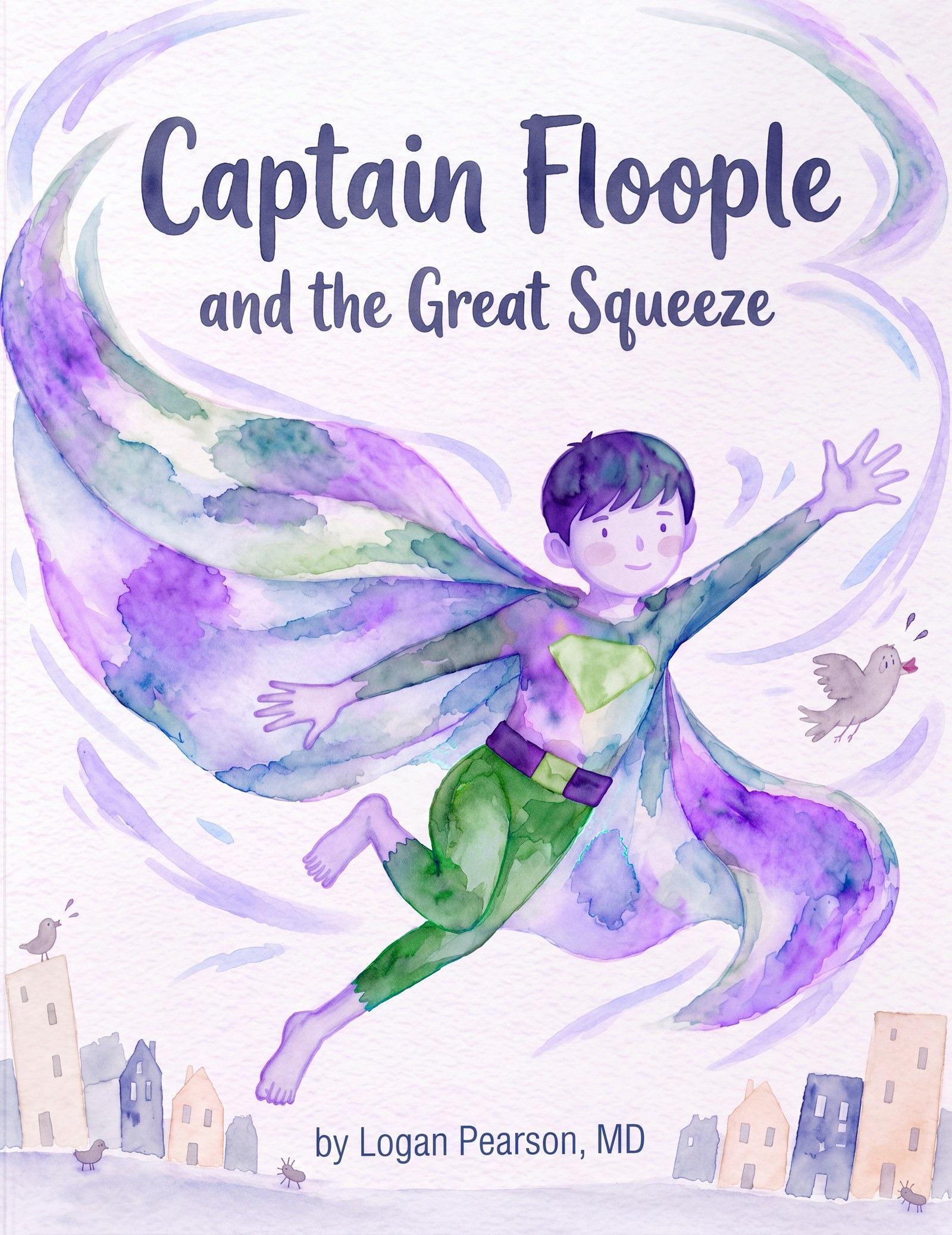
Captain Floople and the Great Squeeze
A Squeeze-and-Let-Go Book for Big Worries
- Written and illustrated byWritten, illustrated by
- Logan Pearson, MD
- Coming in
- English and Spanish
Available Soon!
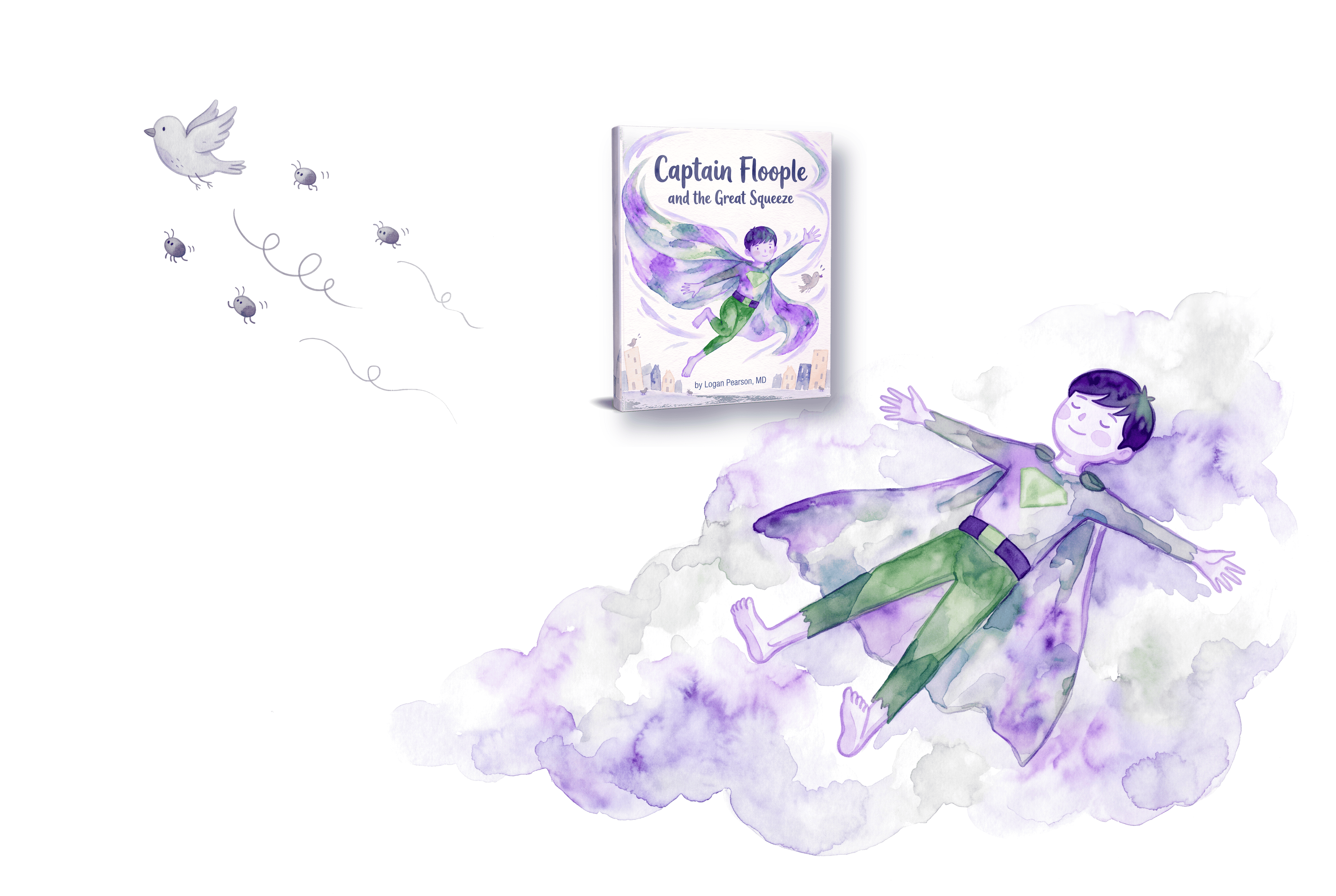
this book practices
progressive muscle relaxationprogressive muscle relaxation
/prəˈɡrɛs.ɪv ˈmʌs.əl ˌri.lækˈseɪ.ʃən/ noun
See also tension and releaselet go
Editions EnglishEspañol
1 / in the story /
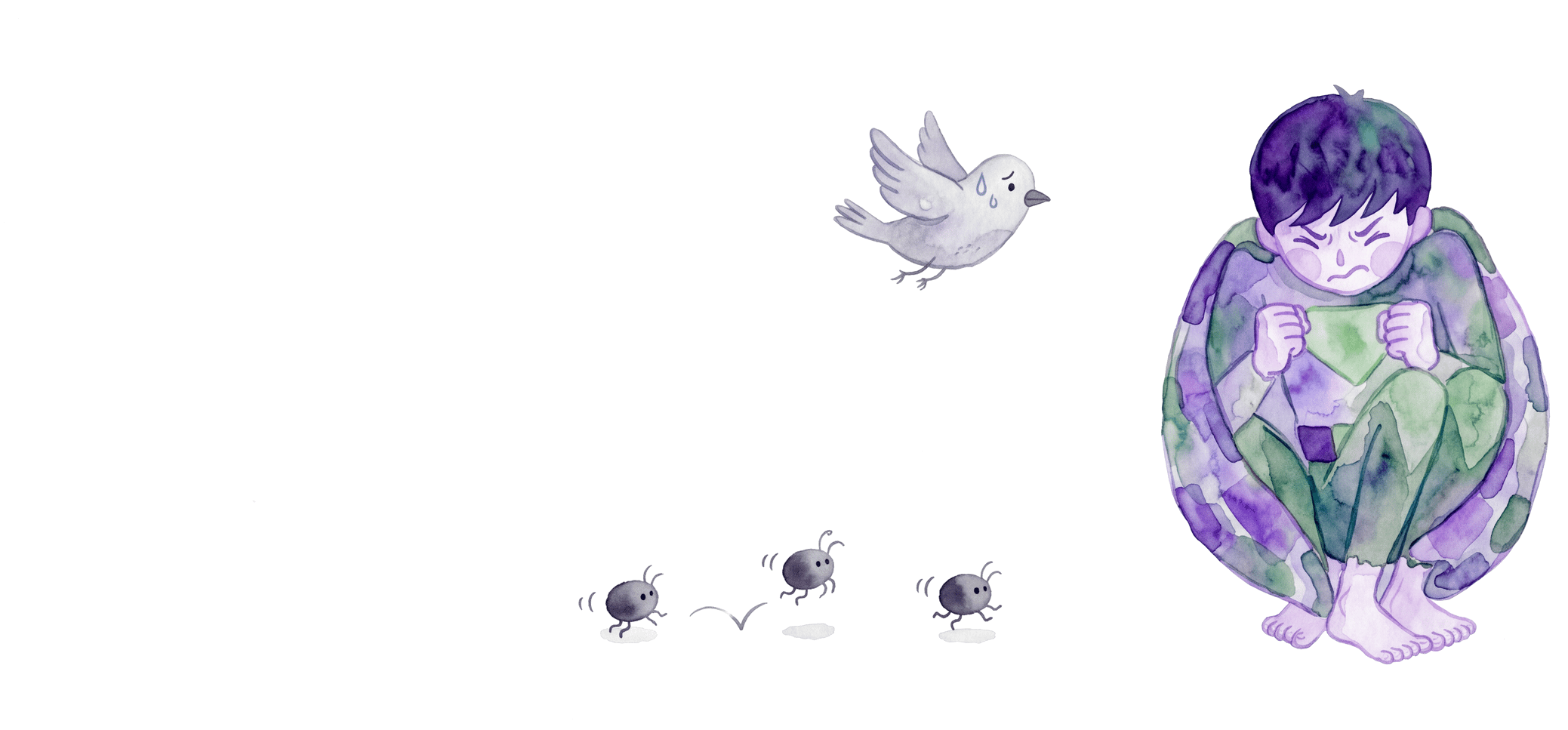
Till he looked like a raisin. A raisin in a cape.
When a floating wizard offers to help, our hero is less than enthusiastic. He argues. He questions the instructions. Then he gives it a try.
2 / how the book practices it /
Tight and loose
Press and hold a picture to squeeze it; let go to watch it loosen. Or squeeze along with the book: tight for five, loose for ten, from toes to face.
Curl them up like ten roly-polies in rows. Ten little piggies, asleep, just like that.
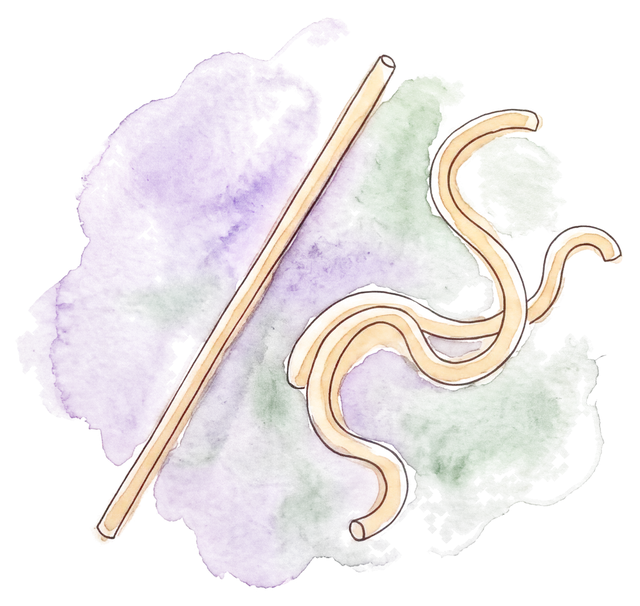
Like spaghetti that is still dry. Like spaghetti fresh out of the pot.
Make it firm, like the top of a drum. Soft as a jiggly jellyfish.
Make fists. Bend your arms. Strike a superhero pose. Like two snakes snoozing in the sun.
Scrunch your nose up and wrinkle your brow. From a raisin to a grape.
3 / this book practices /
progressive muscle relaxation
/prəˈɡrɛs.ɪv ˈmʌs.əl ˌri.lækˈseɪ.ʃən/ noun
A relaxation technique in which a person works through the body one muscle group at a time, briefly tensing each and then releasing it, while noticing how the two feel different.
4 / why it matters /
Interventions targeting emotion-regulation skills have produced modest improvements in youth with mental-health symptoms. [8]
4.1 the evidence for the squeeze
Progressive muscle relaxation is one of several relaxation methods used with children. [19] In small trials, children's anxiety fell after they practiced it before a dental procedure, [20, 21] but the pediatric studies are few and small, and its effects are not consistent, [27, 28] so this page makes no claim that the book has effects. The story borrows one idea from it, noticing how tight feels different from loose, as a playful way into the broader skill.
4.2 what this book is
A playful introduction to that one idea, not a complete therapeutic protocol. The Captain squeezes and lets go one part at a time, from his toes to his face, the way a child can at home.
Nothing here is a claim about this book's effects. It has not been tested as a treatment.
6 / companion resources /
To print and use alongside the book, at home, in a classroom, or in a clinic.
Activity sheet
Tight and Loose: A Squeeze-and-Release Adventure
Download PDF (1.3 MB): Tight and Loose: A Squeeze-and-Release AdventureCaregiver guide
Helping Children Notice and Release Tension
Download PDF (975 KB): Helping Children Notice and Release Tension
See alsoMore ways to practice, Resources
1 / in the story /
“First tighter,” said Zoomer. “Then looser. Then lighter.”
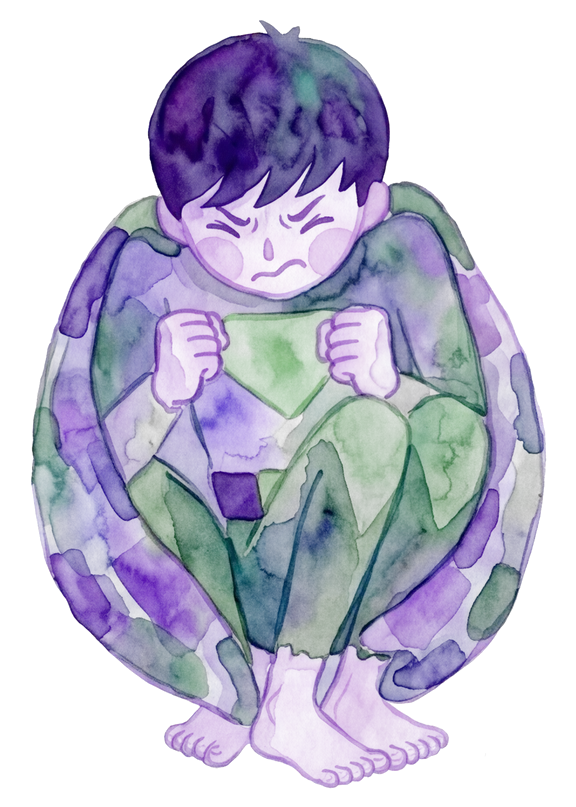
Captain Floople can bounce off the moon, but when worries pile up his whole body scrunches into a raisin in a cape, far too tight to fly. Then Master Zoomer, a floating wizard, has an unlikely suggestion: squeeze even tighter first, then let go.
The Captain argues. He questions the instructions. Then he gives it a try, from stiff spaghetti legs to sleepy-snake arms. So when the Cranky-Foot Crabster stomps into town and chases a cat up a tree, the Captain knows just what to do.
2 / the skill /
progressive muscle relaxation
/prəˈɡrɛs.ɪv ˈmʌs.əl ˌri.lækˈseɪ.ʃən/ noun
A relaxation technique in which a person works through the body one muscle group at a time, briefly tensing each and then releasing it, while noticing how tension and relaxation feel different. []
Squeezing a part of the body and then letting it go shows a child, from the inside, the difference between tight and loose. When a worry makes the body scrunch up, that difference is something to reach for: loosening the body turns the feeling down a little and leaves room to choose what comes next. That is emotion regulation in practice.
It is one of several relaxation techniques used with children and adolescents. []
Why it matters
Interventions targeting emotion-regulation skills have produced modest improvements in youth with mental-health symptoms. []
What the research does not say
Studies of progressive muscle relaxation in children are few and small, and its effects are not consistent, [, ] so this page makes no claim that the book has effects. The story borrows one idea from it, noticing how tight feels different from loose, as a playful way into a broader skill, emotion regulation.
3 / how the book practices it /
Tight and loose
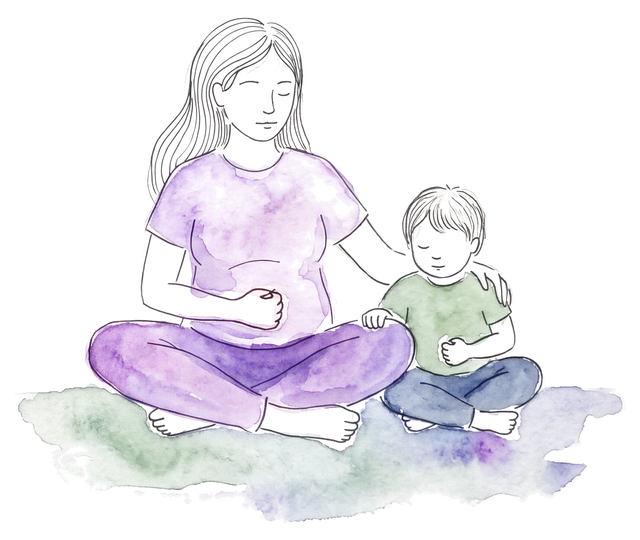
In the book, Master Zoomer talks the Captain through it one part at a time, from his toes to his face: squeeze for a count of five, let go, then rest for a count of ten. Here you can explore the idea yourself. Press and hold a picture to squeeze it, and let go to watch it loosen; or squeeze along, part by part.
Curl them up like ten roly-polies in rows. Ten little piggies, asleep, just like that.
Like spaghetti that is still dry. Like spaghetti fresh out of the pot.
Make it firm, like the top of a drum. Soft as a jiggly jellyfish.
Make fists. Bend your arms. Strike a superhero pose. Like two snakes snoozing in the sun.
Scrunch your nose up and wrinkle your brow. From a raisin to a grape.
4 / companion resources /
Companion resources
See also More ways to practice, Resources
Book details
- Format
- Paperback
- Languages
- English, Español
- Publisher
- Building Blocks Books
Source 1
Bernstein DA, Borkovec TD. Progressive Relaxation Training: A Manual for the Helping Professions. Champaign, IL: Research Press. 1973.
Source 2
Zisopoulou T, Varvogli L. Stress Management Methods in Children and Adolescents: Past, Present, and Future. Horm Res Paediatr 96(1):97-107. 2023.
Source 3
Moltrecht B, Deighton J, Patalay P, Edbrooke-Childs J. Effectiveness of current psychological interventions to improve emotion regulation in youth: a meta-analysis. Eur Child Adolesc Psychiatry 30(6):829-848. 2021.
Source 4
Lohaus A, Klein-Hessling J, Vögele C, Kuhn-Hennighausen C. Psychophysiological effects of relaxation training in children. Br J Health Psychol 6(Pt 2):197-206. 2001.
Source 5
Tsai ML, Cheng TH, Yang YK, Wang CJ. A School-Based Progressive Muscle Relaxation Program for Female Adolescents: Development and the Effectiveness on Physiological and Psychological Evidence. Healthcare (Basel) 9(10):1319. 2021.