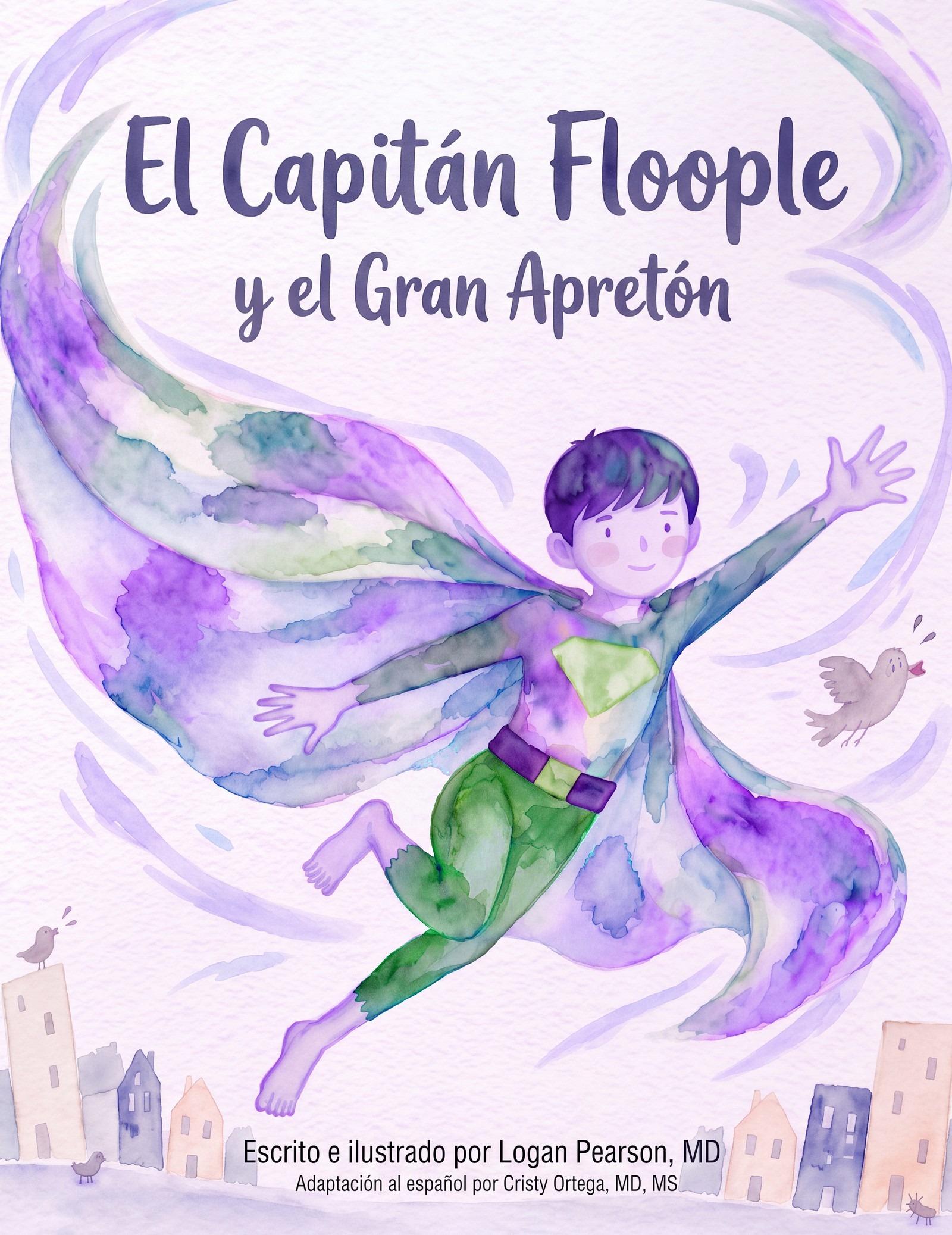
El Capitán Floople y el Gran Apretón
The Spanish edition
Un libro para apretar y soltar las grandes preocupaciones
- Written and illustrated byWritten, illustrated by
- Logan Pearson, MD
- Spanish adaptation by
- Cristy Ortega, MD, MS
- Coming in
- Spanish and English
Available Soon!
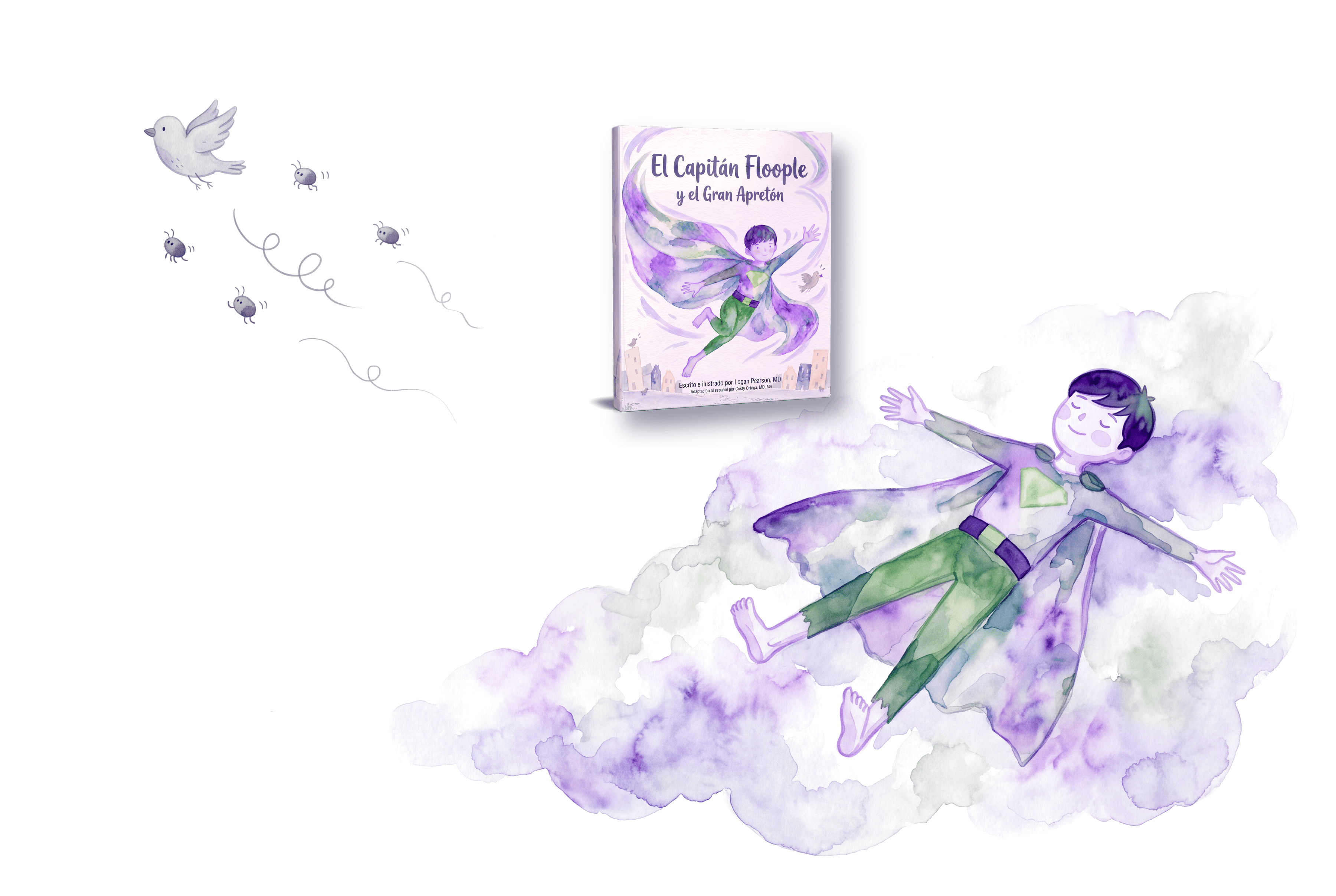

this book practices
progressive muscle relaxationprogressive muscle relaxation
/prəˈɡrɛs.ɪv ˈmʌs.əl ˌri.lækˈseɪ.ʃən/ noun
See also tension and releaselet go
Editions EnglishEspañol
1 / in the story /
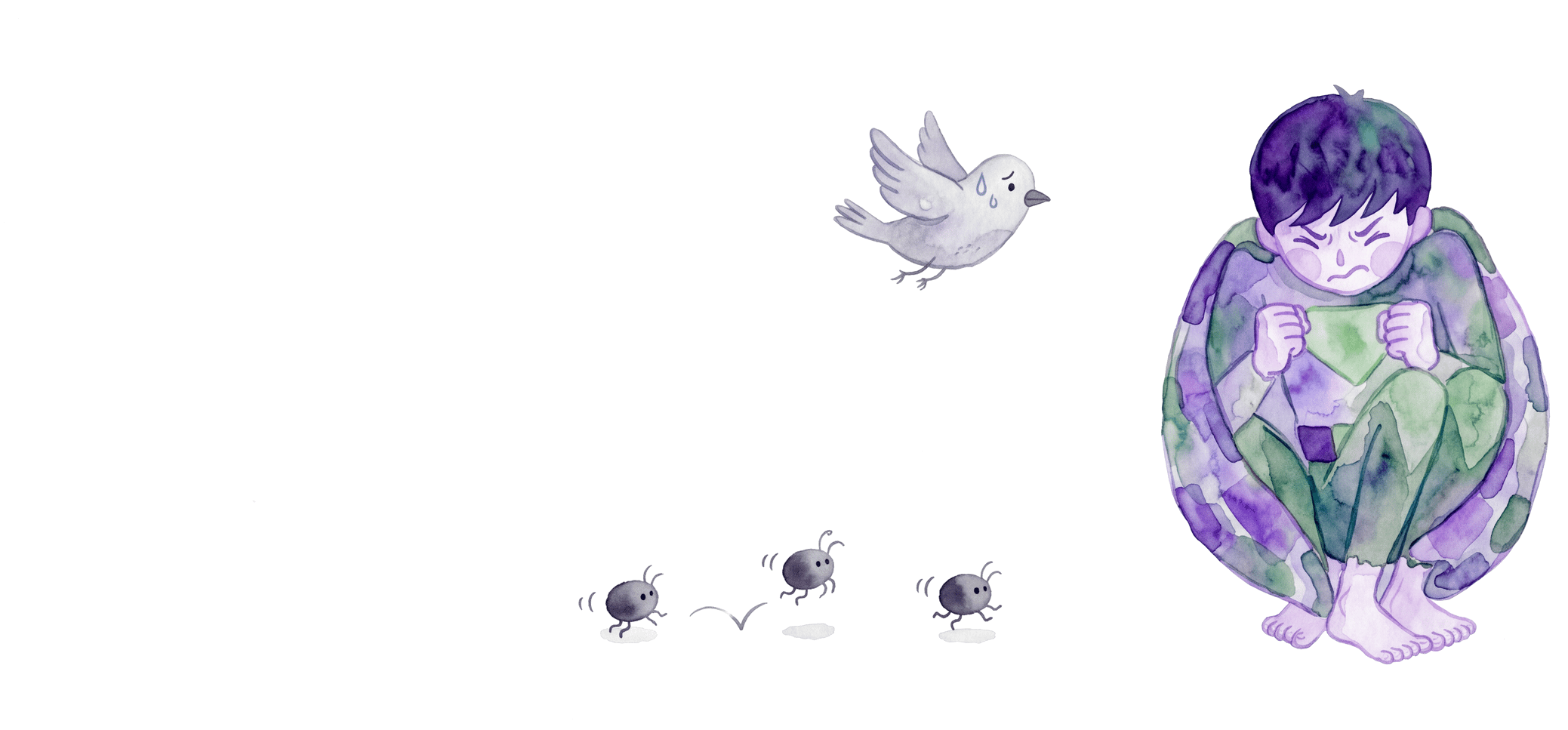
Till he looked like a raisin. A raisin in a cape.
When a floating wizard offers to help, our hero is less than enthusiastic. He argues. He questions the instructions. Then he gives it a try.
2 / how the book practices it /
Tight and loose
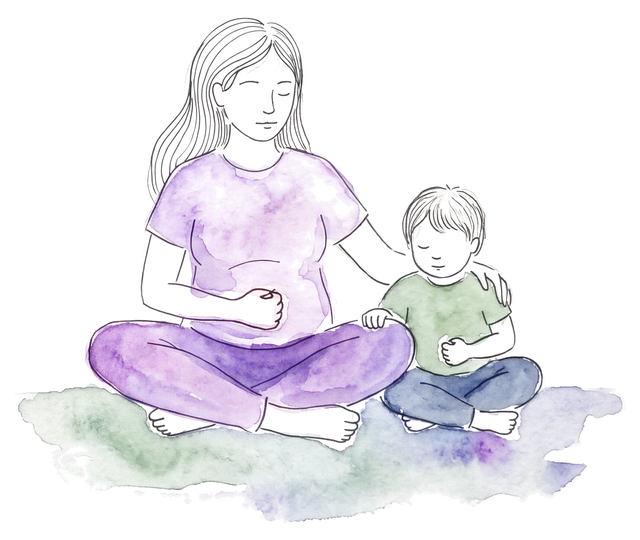
Press and hold a picture to squeeze it; let go to watch it loosen. Or squeeze along with the book: tight for five, loose for ten, from toes to face.
Encógelos como diez bichitos bolita en fila. Diez cerditos dormidos, así, sin más.
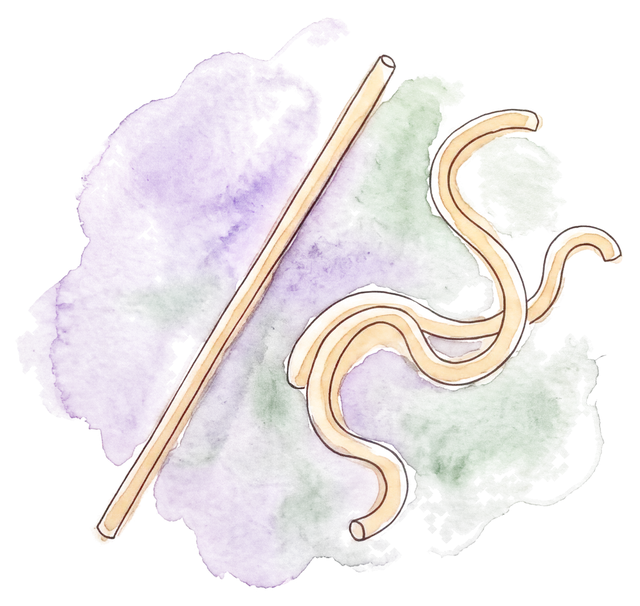
Como espaguetis todavía secos. Como espaguetis recién salidos de la olla.
Ponla firme, como la tapa de un tambor. Blandita como una medusa temblorosa.
Cierra los puños. Dobla los brazos. Pose de superhéroe. Como dos serpientes dormidas al sol.
Arruga la nariz y frunce la frente. De una pasa a una uva.
3 / this book practices /
progressive muscle relaxation
/prəˈɡrɛs.ɪv ˈmʌs.əl ˌri.lækˈseɪ.ʃən/ noun
A relaxation technique in which a person works through the body one muscle group at a time, briefly tensing each and then releasing it, while noticing how the two feel different.
4 / why it matters /
Interventions targeting emotion-regulation skills have produced modest improvements in youth with mental-health symptoms. [8]
4.1 the evidence for the squeeze
Progressive muscle relaxation is one of several relaxation methods used with children. [19] In small trials, children's anxiety fell after they practiced it before a dental procedure, [20, 21] but the pediatric studies are few and small, and its effects are not consistent, [27, 28] so this page makes no claim that the book has effects. The story borrows one idea from it, noticing how tight feels different from loose, as a playful way into the broader skill.
4.2 what this book is
A playful introduction to that one idea, not a complete therapeutic protocol. The Captain squeezes and lets go one part at a time, from his toes to his face, the way a child can at home.
Nothing here is a claim about this book's effects. It has not been tested as a treatment.
6 / companion resources /
To print and use alongside the book, at home, in a classroom, or in a clinic.
Activity sheet
Tight and Loose: A Squeeze-and-Release Adventure
Download PDF (1.3 MB): Tight and Loose: A Squeeze-and-Release AdventureCaregiver guide
Helping Children Notice and Release Tension
Download PDF (975 KB): Helping Children Notice and Release Tension
See alsoMore ways to practice, Resources
1 / in the story /
«Primero más apretado», dijo Zoomer. «Luego más suelto. Luego más ligero».
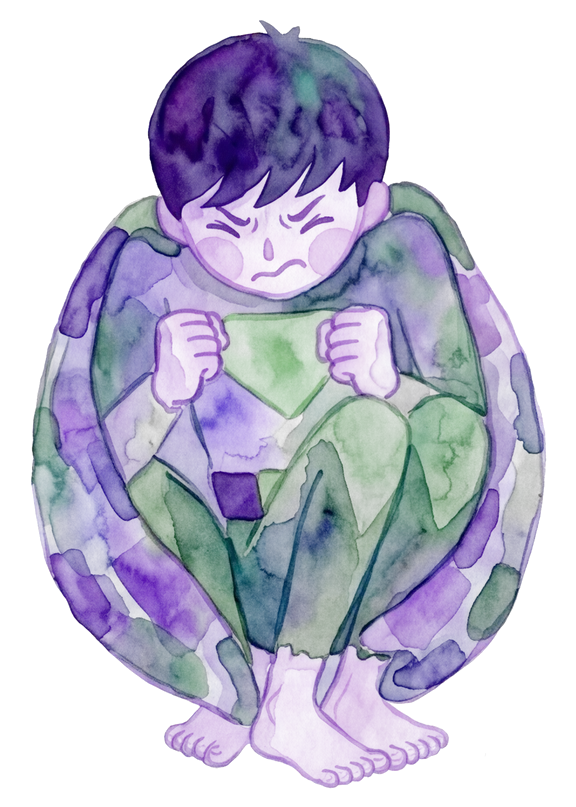
Captain Floople can bounce off the moon, but when worries pile up his whole body scrunches into a raisin in a cape, far too tight to fly. Then Master Zoomer, a floating wizard, has an unlikely suggestion: squeeze even tighter first, then let go.
The Captain argues. He questions the instructions. Then he gives it a try, from stiff spaghetti legs to sleepy-snake arms. So when the Cranky-Foot Crabster stomps into town and chases a cat up a tree, the Captain knows just what to do.
2 / the skill /
progressive muscle relaxation
/prəˈɡrɛs.ɪv ˈmʌs.əl ˌri.lækˈseɪ.ʃən/ noun
A relaxation technique in which a person works through the body one muscle group at a time, briefly tensing each and then releasing it, while noticing how tension and relaxation feel different. []
Squeezing a part of the body and then letting it go shows a child, from the inside, the difference between tight and loose. When a worry makes the body scrunch up, that difference is something to reach for: loosening the body turns the feeling down a little and leaves room to choose what comes next. That is emotion regulation in practice.
It is one of several relaxation techniques used with children and adolescents. []
Why it matters
Interventions targeting emotion-regulation skills have produced modest improvements in youth with mental-health symptoms. []
What the research does not say
Studies of progressive muscle relaxation in children are few and small, and its effects are not consistent, [, ] so this page makes no claim that the book has effects. The story borrows one idea from it, noticing how tight feels different from loose, as a playful way into a broader skill, emotion regulation.
3 / how the book practices it /
Tight and loose
In the book, Master Zoomer talks the Captain through it one part at a time, from his toes to his face: squeeze for a count of five, let go, then rest for a count of ten. Here you can explore the idea yourself. Press and hold a picture to squeeze it, and let go to watch it loosen; or squeeze along, part by part.
Encógelos como diez bichitos bolita en fila. Diez cerditos dormidos, así, sin más.
Como espaguetis todavía secos. Como espaguetis recién salidos de la olla.
Ponla firme, como la tapa de un tambor. Blandita como una medusa temblorosa.
Cierra los puños. Dobla los brazos. Pose de superhéroe. Como dos serpientes dormidas al sol.
Arruga la nariz y frunce la frente. De una pasa a una uva.
4 / companion resources /
Companion resources
See also More ways to practice, Resources
Book details
- Format
- Paperback
- Languages
- Español, English
- Publisher
- Building Blocks Books
Source 1
Bernstein DA, Borkovec TD. Progressive Relaxation Training: A Manual for the Helping Professions. Champaign, IL: Research Press. 1973.
Source 2
Zisopoulou T, Varvogli L. Stress Management Methods in Children and Adolescents: Past, Present, and Future. Horm Res Paediatr 96(1):97-107. 2023.
Source 3
Moltrecht B, Deighton J, Patalay P, Edbrooke-Childs J. Effectiveness of current psychological interventions to improve emotion regulation in youth: a meta-analysis. Eur Child Adolesc Psychiatry 30(6):829-848. 2021.
Source 4
Lohaus A, Klein-Hessling J, Vögele C, Kuhn-Hennighausen C. Psychophysiological effects of relaxation training in children. Br J Health Psychol 6(Pt 2):197-206. 2001.
Source 5
Tsai ML, Cheng TH, Yang YK, Wang CJ. A School-Based Progressive Muscle Relaxation Program for Female Adolescents: Development and the Effectiveness on Physiological and Psychological Evidence. Healthcare (Basel) 9(10):1319. 2021.