resources/rɪˈsɔːrsɪz/n.
Beyond the last page.
Stories introduce ideas. These resources help children explore them, practice them, and make them their own.
Choose a practice to try together, with activity sheets and guides to keep.

Find a building block.
Every big skill starts somewhere small. Choose something to explore and try together.
Calm Breathing
A little space to find your rhythm.
Breathing is something our bodies already know how to do. This activity gives children a simple way to notice it and experiment with a comfortable rhythm. Try it when things are relatively calm, so the practice feels familiar if a child wants to use it later.
1 Try it together
Try it together: Trace and Breathe
1–2 minutes
On-screen activity
Trace the painted square
Start the guided trace and follow the marker around the square. Pause or stop whenever you like. You do not need to match its pace.

 2 breathe in3 pause4 breathe out5 rest
- Trace an imaginary square in the air, on paper, or with a finger on a surface.
- breathe in: Along the first side, take a gentle breath in.
- pause: Along the second side, pause comfortably if you want to, or simply keep moving.
- breathe out: Along the third side, breathe out naturally.
- rest: Along the fourth side, rest briefly if comfortable, or continue into another easy breath.
- Repeat only while it feels pleasant. There is no need for perfect timing or forced deep breaths.
2 Take it with you
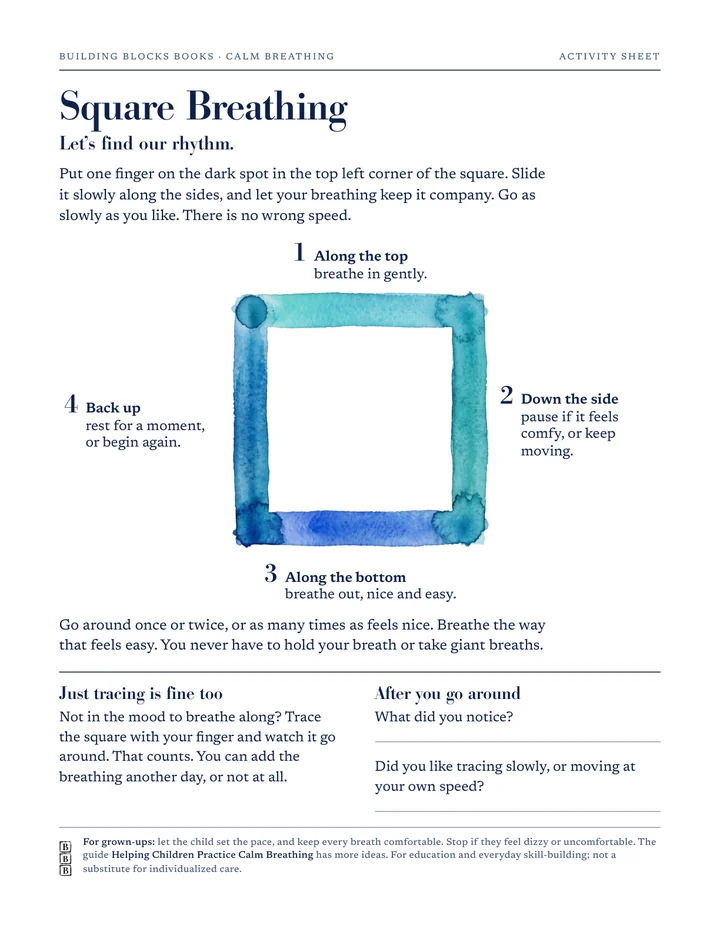
Activity sheetActivity sheet
Square Breathing: Let's Find Our Rhythm
For children, with an adult
The painted square to trace with a finger, a side for each part of a gentle breath, a way to trace without breathing along, and two questions for afterward.
Downloads (PDF)
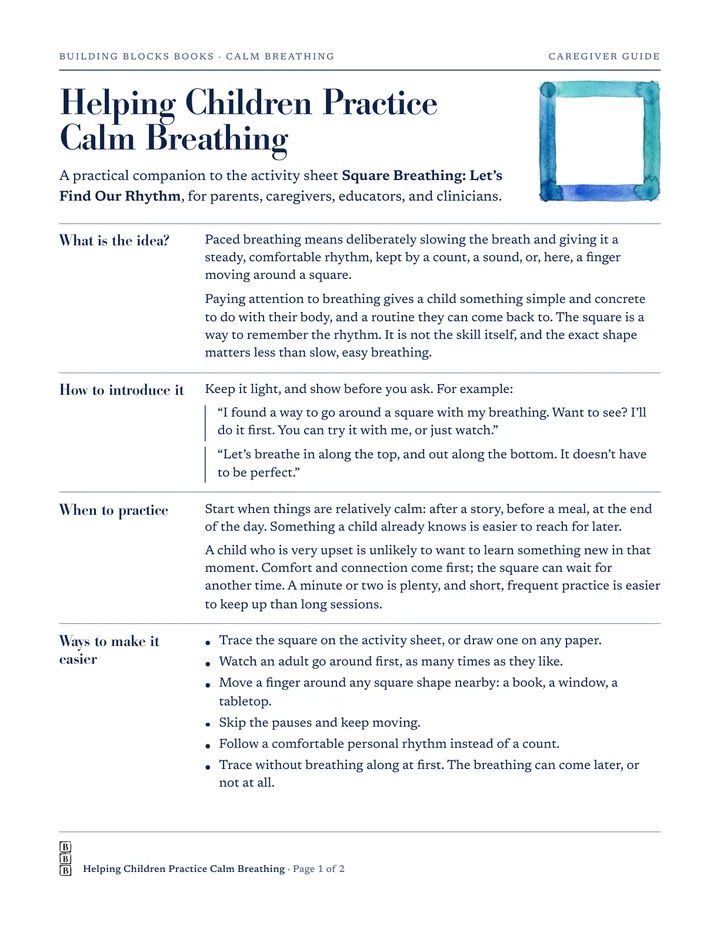
Caregiver guideCaregiver guide
Helping Children Practice Calm Breathing
For parents, educators, and clinicians
How to introduce the square and when to practice it, ways to make it easier, mistakes to avoid, and what the research on paced breathing does and does not show.
Downloads (PDF)
3 How to use it
Breathing is something our bodies already know how to do. This activity gives children a simple way to notice it and experiment with a comfortable rhythm. Try it when things are relatively calm, so the practice feels familiar if a child wants to use it later.
Talk about it
- What did you notice?
- Did one part feel easier than another?
- Would you rather trace, watch, or try something different?
Make it your own
Children can trace a square, draw one on paper, or simply follow a comfortable breathing rhythm. Pauses are optional. Never require a child to hold their breath, breathe forcefully, or continue an activity that feels uncomfortable.
In everyday life
- At home
- Try the exercise together during a calm moment. Let the child choose whether to participate, watch, or suggest a different way to practice.
- In a group
- Invite everyone to trace at their own pace. Participation should be optional, and no one needs to match another person's breathing.
- During a visit
- When appropriate, demonstrate a comfortable breathing pattern as an optional supportive activity. It is not a substitute for evaluating breathing symptoms or distress.
4 Where it comes from
From the story
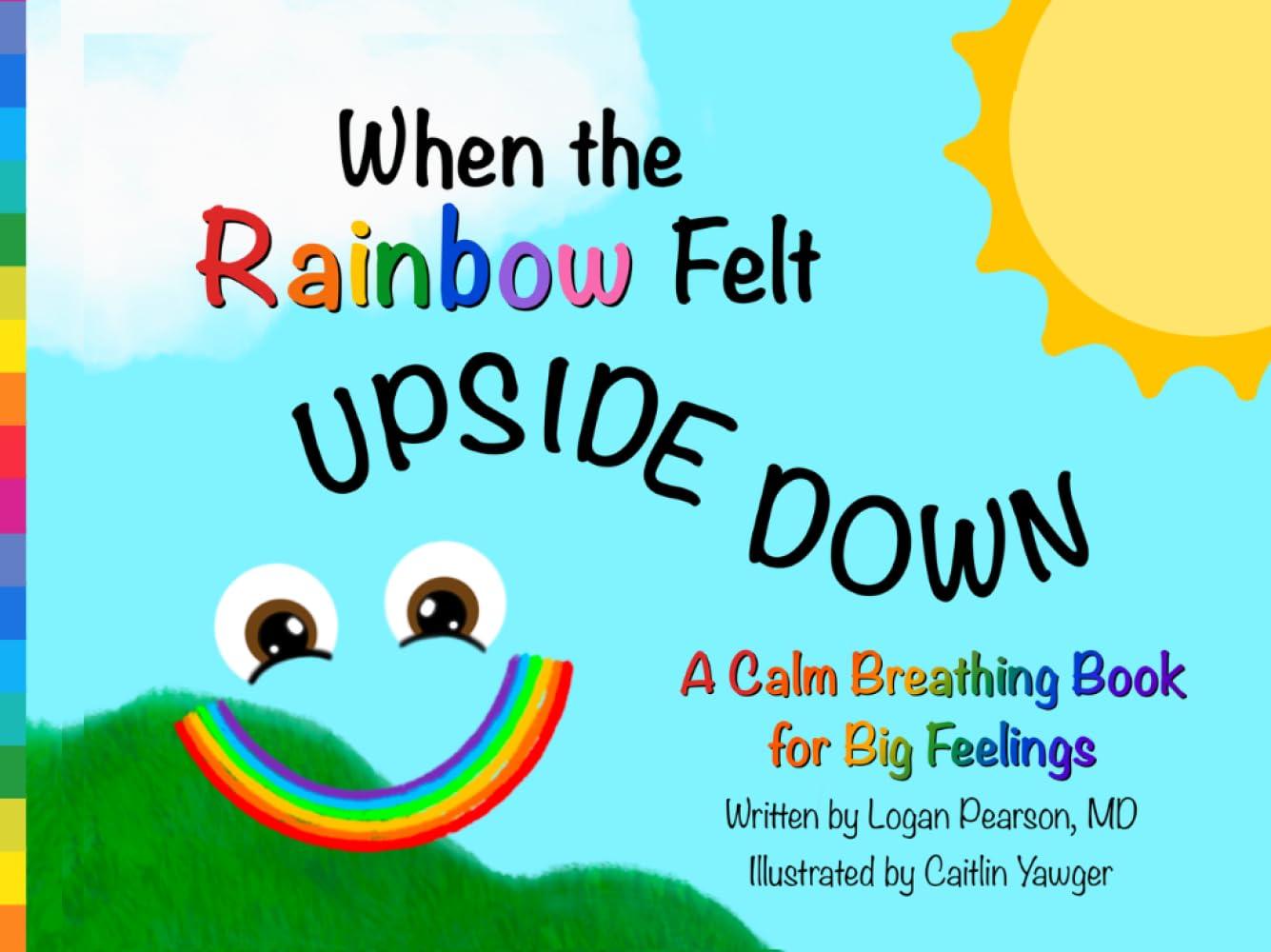
When the Rainbow Felt Upside Down
A reassuring story with a simple rhythm for slowing the breath. Trace and Breathe keeps that rhythm close at hand after the book is closed.
Visit the book: When the Rainbow Felt Upside DownBehind the practice
The evidence for paced breathingThe evidence for paced breathingTracing a square is a form of box breathing, one equal-count pattern of paced breathing. The square is there to make the rhythm easy to remember. The research we summarize supports slow, paced breathing more broadly than the square itself.
A few good questions.
- Do I need one of the books?
- No. These activities can be used on their own. The stories simply offer another way to introduce and revisit the ideas.
- When should we practice?
- Starting during relatively calm moments can help children become familiar with an activity before trying it in more challenging situations.
- What if a child doesn't want to participate?
- That's fine. Offer a different approach, demonstrate without expecting participation, or save the activity for another time.
These resources are intended for education and everyday skill-building. They do not replace individualized medical, developmental, mental health, or educational care.